India's Most Trusted
Software Development Company
We build digital solutions that help you to grow your business. From high-performance websites and custom web applications to future-ready SaaS products and result-driven e-commerce platforms, our team provides you technology that is high-performance, secure, and prepared for what’s next.
From growing startups to global enterprises, we build specialized technology that supports innovation, high performance, and revenue driving.
We build digital solutions that help you to grow your business. From high-performance websites and custom web applications to future-ready SaaS products and result-driven e-commerce platforms, our team provides you technology that is high performance and prepared for what’s next.
Trusted by 1,250+ Businesses Globally
Enterprise Standards.
Agile Delivery.
Architecture & Strategy
Future-proof scalable system design
Elite Engineering
High-performance custom software
Security & Compliance
Enterprise-grade data protection
500+ Products. 11+ Years. Still Building.
From startups to enterprises, we have delivered websites, SaaS, and e-commerce solutions in over 50+ countries.
Websites Delivered
Static websites, dynamic websites, and custom web apps. We build a powerful online presence that scales your business.
SaaS Products
Secure, high-performance, reliable, and intuitive SaaS product development for your business. From SaaS start-ups to enterprise-grade platforms.
E-commerce Stores
Build e-commerce stores that deliver the best shopping experiences. From secure payments it is easy to understand product handling.
Years of Experience
Creating innovative, effective solutions to businesses worldwide, with a strong focus on quality, fast performance, and client success.
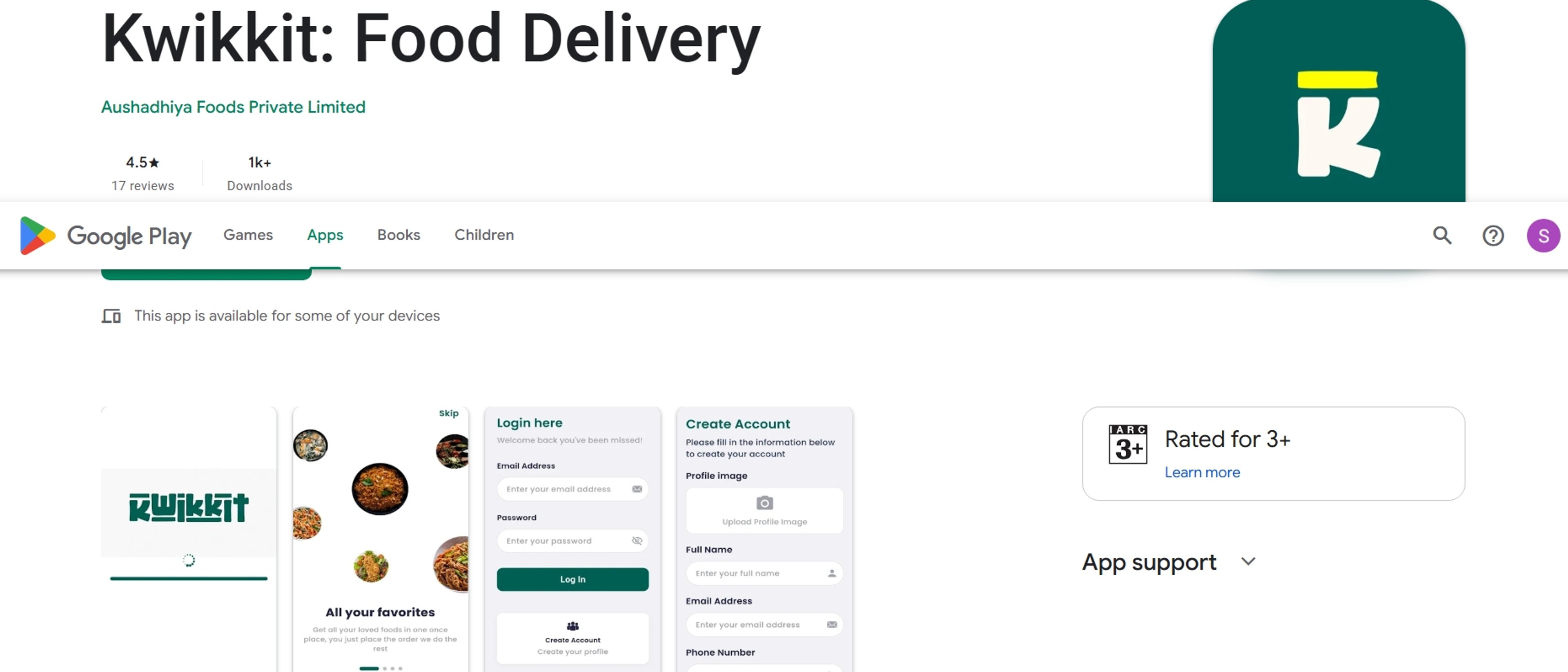
Featured Projects
Explore a selection of our latest work and see how we've helped organizations transform their digital presence.
View All Work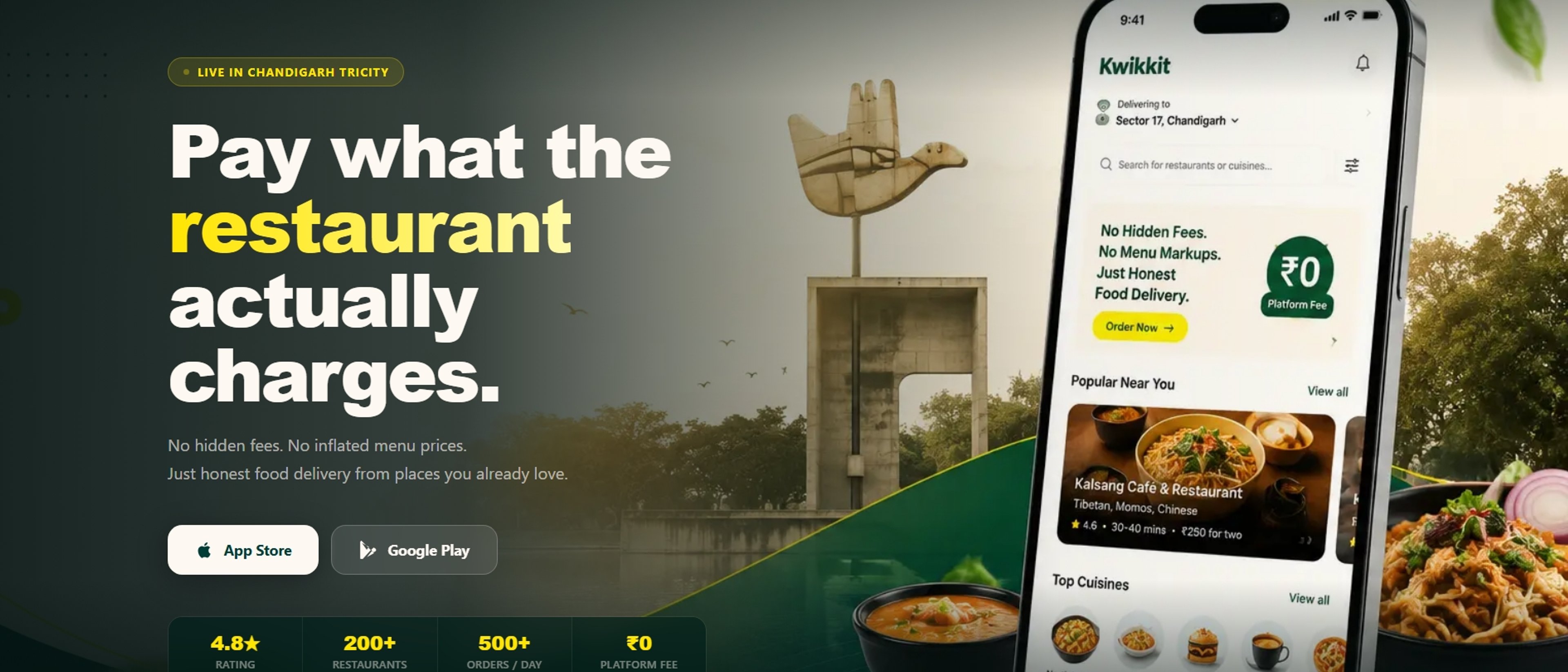









Our Website Building Process.
We keep you informed throughout the process. From start to launch, you’ll get everyday updates and an opportunity to share your feedback.
Latest Blogs
Thoughts, tutorials, and engineering deep-dives from our team.
Read Our Blog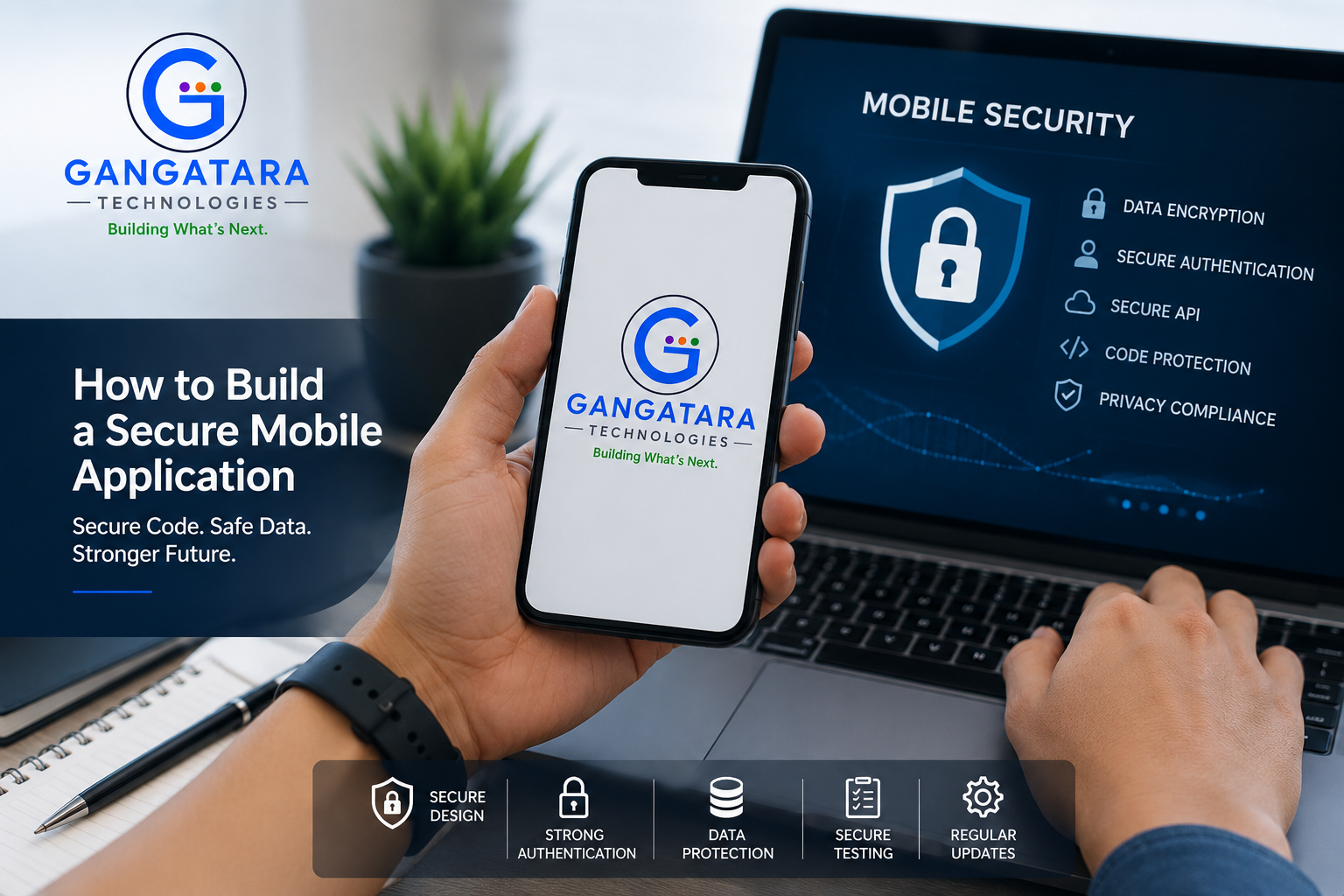
How to Build a Secure Mobile Application Essay.
The mobile application has become increasingly significant in contemporary business practices because it enables company representatives to perform routine tasks, save customers’ payment data, conduct customer relationship management, and interact with clients. Yet, they have become an attractive target for hackers since the apps contain a substantial amount of personal and business data. A secure data application is essential because it significantly minimizes the risk of being hacked or compromised. Besides, a safe and reliable mobile application enhances the organization’s image, attracting more customers. This article aims to provide an overview of the tips on how to build a secure mobile application. 1. Plan the Security Strategy. The first step in developing a secure application is to identify the firm’s security requirements and design a mobile application strategy. At this stage, the application developer should understand what data the software will store and process. A secure application development plan includes the risk assessment process, addressing weaknesses, and establishing security standards. 2. Design a Secure Authentication System. The authentication system enables only selected users to access the application’s data and resources. An insecure authentication system allows attackers to gain unauthorized access to the firm’s software and data. In this regard, businesses should invest in secure authentication solutions, techniques, and procedures to protect their systems from being compromised. Location, phone numbers, passwords, and touch authentication can also be used to enhance security. A strong authentication strategy should be designed to protect the application from brute-force attacks, which prevent attackers from gaining access to sensitive information. 3. Ensure Confidentiality of Users’ Personal and Business Data. Personal and business data of the application users are the most desirable information for hackers. Hence, software designers should develop an encryption strategy to ensure confidentiality and prevent the occurrence of cyber safety risks, data integrity risks, and system availability risks. The encryption strategy should be applied while designing the application to guarantee that the data are not stored on the users’ devices where the software is installed because it is insecure. Developers should also ensure that the encryption keys and authentication data are not saved on their devices. Besides, they should apply data confidentiality encryption to guarantee that the data being processed are secure. Another effective strategy for achieving confidentiality is key rotation. 4. Ensure Secure Data Communication Through API. The Application Programming Interface (API) document serves as an intermediary between servers, systems, and web services. API security entails the encryption of data to ensure its confidentiality and integrity while protecting the application data and systems in the servers, systems, and web services. The servers should be able to authorize every transaction conducted within the application. For instance, firms can use API security to limit communication to avoid data manipulation and prevent unauthorized modification of the application. 5. Adopt Secure Application Coding. A secure software development life cycle should include developing secure coding standards and practices to prevent risks at the source. Code confidentiality is vital because it is prone to vulnerabilities and can be compromised, thus exposing the firm’s application programming framework and encryption keys to attackers. Firms should ensure that all data, instructions, and information sent to their application are secure since they can be used to maneuver the system and cause harm. Developers should use appropriate and secure web application development techniques and guidelines while designing and building the software. Application libraries, tools, codes, and software development kits have vulnerabilities and should be updated regularly. Developers should adhere to the principles of secure application programming, such as using encrypted application programming instruction (API). They should also guarantee confidentiality of application programming instruction (API) keys and programming passwords. 6. Develop a Safe Authorization Mechanism. The authorization mechanism allows the application users and administrators to authorize or deny approval of requests sent to the application services. The authorization process enables the application users to ensure that only approved users or software access the application services and data. Besides, it guarantees that the application data and services are protected from illegal access. Therefore, businesses should deny access to the application users unless they have been granted permission. At the same time, the application’s authorization mechanism should ensure that only the authorized users access the application data and services. It should also be able to deny data access to unauthorized users and confirm whether the application users requesting specific information have permission to access the data. 7. Keep Application Keys Confidential. Confidentiality is vital for the success of application programming instruction (API), as it safeguards the most critical aspects, including the application programming instruction (API) keys and programming passwords. Hence, it is essential to ensure that this information is not accessed by unauthorized individuals or entities. Organization data are stored in servers, which are remote, whereas the secret, which enables the application on the phones to communicate and send messages, is local. Therefore, it is essential for the company to invest in software protection and ensure that the application is safe from threats such as password guessing, reverse engineering, application hacking, inspection and debugging processes, API security, exposure of cryptographic signatures, and system processes. 8. Ensure Regular Expression Testing. One of the best ways of keeping mobile data apps secure is by conducting regular testing of the system to detect existing and potential cybersecurity risks. Expression testing enables firms to identify loopholes, making it difficult for hackers to manipulate the default settings and damage the application. Companies should perform monthly tests on their data applications to protect them against the following: Unauthorized access Injections Broken or insecure authentication Broken or unprotected data A firm can conduct the following tests to ensure the application’s security: Vulnerability and penetration scanning and testing Code review Security testing API testing Authentication test Data protection test Mobile device test and security testing 9. Keep Tools, Add-ons, and Libraries Updating. Updating tools on a frequent basis enhances the performance of the applications. For instance, companies should update tools such as Application Programming Interfaces (APIs), Scales Development Kit, tools, codes, and programming languages to develop a secure mobile application. Developers should also update the security features, including the strategies used to protect application data from being tampered with and authentication strategies. 10. Provide Constant Application Protection. Application security is not absolute; thus, it is essential for the developers to provide cybersecurity advice to the application users. This will enable them to stay ahead of existing and potential threats. New data safety measures, authentication strategies, and application programming code are frequently introduced in the mobile ecosystem, which may compromise the application’s security. Best Practices for Mobile Application Security Firms that intend to design a mobile data application should consider adopting the following cybersecurity recommendations and strategies: Ensure that the system uses HyperText Transfer Protocol Secure 1. Invest in key authentication and develop a strong multifactor authentication system. Provide encryption for a secure application. Adopt the strategy to prevent unauthorized input. Implement Application Program Interface (API) authentication and authorize Avoid storing private information. Ensure that libraries, tools, and add-ons are regularly updated by removing the obsolete programs. Conduct extensive testing to guarantee application security. It is important to promote and maintain the applications. Adopt a system that protects the secrecy and confidentiality of the clients’ data. Conclusion. Designing an organization’s secure mobile application requires knowledge about the mobile threat environment and application security measures, procedures, and tactics, including cryptography and secure key management. Acquiring information about the technology underpinning cellular communication, including the security aspects of the cellular infrastructure, is equally crucial. As an information technology outsourcing company, Ganagatara Technologies offers application design, creation, and development strategies that are in the firm’s best interest. Are you interested in creating a secure mobile application? Allow us to help you convert ideas into reality at Ganagatara Technologies Limited.
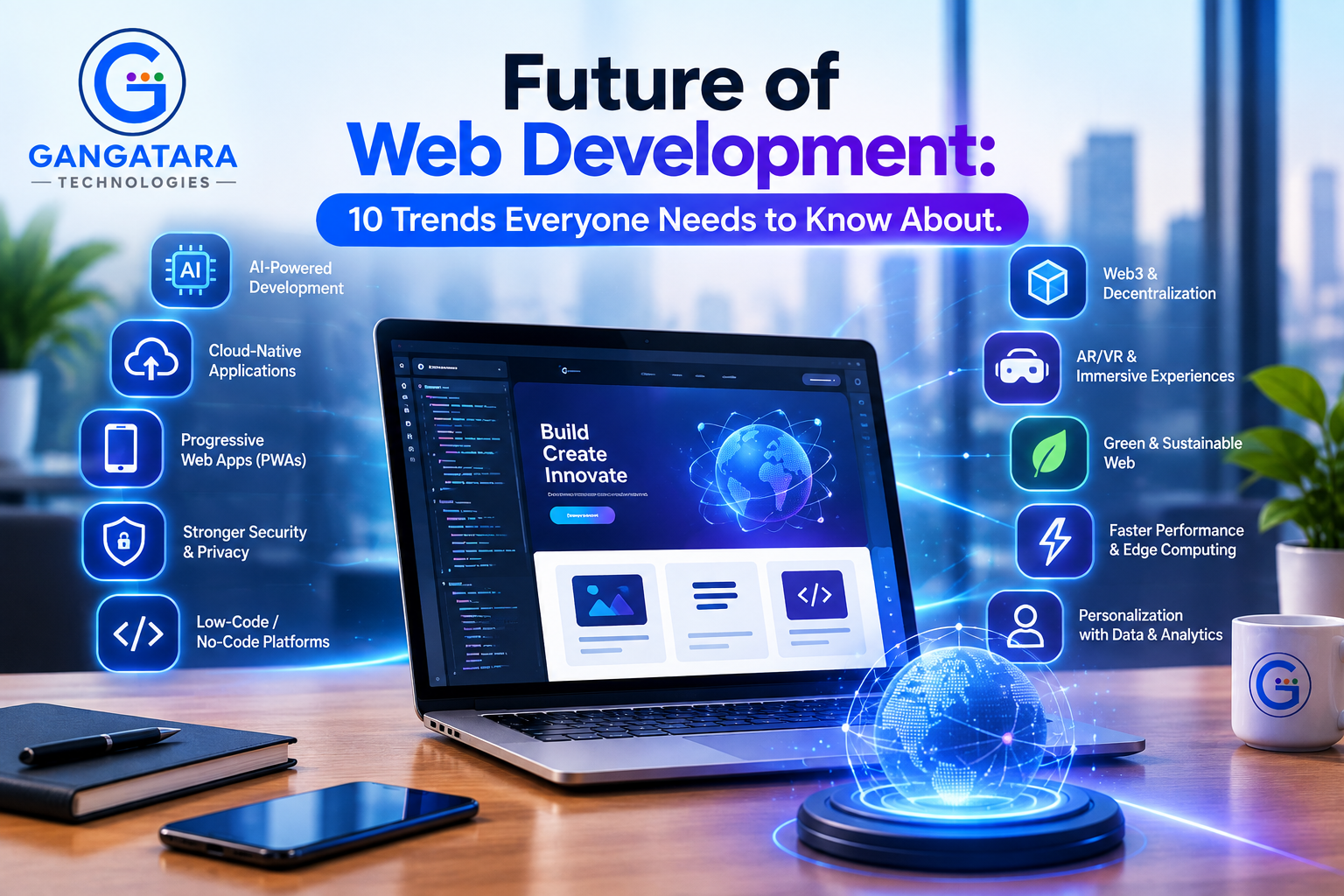
Future of Web Development: 10 Trends Everyone Needs to Know About.
Technologies have evolved and will continue to evolve in the coming years! Companies and organizations are beginning to design dynamic, interactive, and secure websites. Artificial intelligence, PWAs, Web3, web apps, and cloud computing will have a great role in the future of website development. If you are an organization considering how to hire the best professional web developers or struggling to find the best company to hire and outsource for custom web development to support your successful and growing business, then you definitely need to read the information provided below. 1. Artificial Intelligence. Artificial intelligence will become sophisticated and advanced to the level of human intelligence capabilities. This will mean that websites will become smarter and more intuitive to offer a better experience to their visitors. For instance, the following are examples of what will be possible: A chatbot with artificial intelligence capabilities. Recommendations of products. Improvements to search engines. More efficient and effective articles created by artificial intelligence. You will see more and more companies and organizations take advantage of the possibilities and opportunities that this emerging disruptive technology called artificial intelligence and machine learning presents. 2. Progressive Web Apps. PWAs (Progressive Web Apps) will continue to grow and become more prominent in the future of website development due to the rising demand and need for mobile-friendly sites. These applications connect users and offer fantastic experiences that keep them coming back! Companies and organizations will continue to invest in such applications to gain more market share. Some of the benefits that these applications offer include the following: Fast-loading applications Improved performance even with slow internet connections More features offered Ability to use the application offline Higher rates of engagement Lower costs of developing web applications 3. Build sites that work on mobile devices. Mobile devices have overtaken personal computers as the most popular computing devices. As such, every business owner needs to make sure that their website is responsive so that it offers a positive customer experience. Such sites are able to adapt to the screen size that they are being viewed on. 4. Voice search optimization. Voice assistants such as Google and Alexa have allowed people to access the web hands-free and have changed the SEO and digital marketing world forever. Websites and web applications have to optimize for voice search if they want to remain relevant and appear on the first page of search engine results. The optimization will be done in the following ways: Use of natural language. Answering more questions. Having a higher chance of ranking number one for voice search by taking advantage and making the most out of the snippet section. Improving the speed of the site. Embrace low-code and no-code platforms. Companies and organizations are anticipated to utilize more no-code or low-code platforms to develop applications in the future. Although such sites still require coding, the development process is accelerated! These platforms will enable people without any coding experience to develop simple web applications. At the same time, professional website developers will take advantage of such platforms because they allow them to develop websites much faster! Nevertheless, you should not completely rely on such platforms because they cannot support the development of enterprise-level web applications. Therefore, you should not ignore professional website development altogether. 6. Cyber and information security. Website security will remain important, and more time and resources will be spent on making sure that sites are safe and secure in the future. The following are some of the ways that organizations and companies will make sure that websites and Web applications are safe and secure: More levels of security, such as multifactor security. More secure APIs through advanced technologies. Encrypted data. Better security audits to protect websites and web applications from cyberattacks such as viruses and ransomware that target sensitive data Website and application security is important for customer trust and SEO; therefore, it is money well spent to invest in website and application security. 7. Serverless and cloud technologies. More cloud companies will continue to invest in the development of websites and web applications using the cloud computing framework in the future. This will enable companies to make their sites fast and very cost-effective at the same time. Website development companies will begin to develop more applications using the serverless framework! Some of the benefits that come with such technologies are listed below: Cost-effective Easy to use High scalability of the application More reliable services. 8. Motion UI design. Customers and visitors will always want to access sites that are aesthetically pleasing and have a good design. However, motion user interface design will enable developers to make websites and web applications more engaging and interactive. There will be many animations and features that will make the experience of using such apps very entertaining. The following are some of the ways that motion UI design will make the websites more engaging: Interesting ways of doing things such as animations and transitions. Interactive elements of some sort. Better scrolling. Visual feedback such as animations and hover effects. Nice buttons. This does not mean that websites and web applications will be filled with special effects and animations but rather take advantage of such features to make the experience of the visitor or customer better and more engaging. 9. API-first approach. Most of the website development and applications in the future will revolve around application programming interfaces (APIs). Such technologies will make applications and websites more scalable, reliable, and flexible and much easier to integrate web technologies for effective applications. Companies and organizations will begin to develop more API-driven applications. 10. Green web development practices. Website developers in the future will be more concerned with conserving energy due to minimal wastage of resources. Web developers will optimize their sites to ensure that they have fewer requirements for processing power. Such developers will employ such technologies as image optimization to make sure that the sites are energy efficient. They will also make sure that they adopt green web hosting so that the websites and web applications that they develop are very efficient. Web developers will make sure that they have sites that are energy efficient, thereby conserving the environment. Such website developers understand that energy-efficient and environmentally friendly websites and web applications are easy to index and rank higher on search engines. Conclusion: Organizations need to make their websites faster, better, more interactive, and more dynamic to meet the demands of their target customers. Future developments in web development and design will allow companies to do just that. As explained in this article, web developers can take advantage of a number of emerging technologies to develop smarter and powerful websites with high traffic. Ganagatara Technologies experts are always up-to-date with the best future strategies for web development services. If you are looking for the best company to develop a better and more effective website for your business, contact Ganagatara Technologies right away.

How to Make Your Website More User-Friendly.
A user-friendly website is one that enables each person who lands on it to find the information they want, navigate around the site comfortably, get to know your business, and be able to take action. These days, everyone is in a hurry, so, if they have to wait on a website, they are likely to go to another option. This shows us that websites need to be user-friendly. A user-friendly website can be defined as one that has enhanced UI/UX design with fast loading speed, scannable text, responsive design for devices, accessibility features, and optimized navigation. Let us take a look at these ten easy ways to make your site more user-friendly. 1. Improve Navigation on Your Website. Navigation is the website element that guides its users from one section to another. It is critical to have simple navigation on your website, like the ones below: Home, About Us, Services, Products, Blog, Contact Us. Avoid making unnecessary links that might confuse people on your website. Also, it is essential not to make your primary web navigation bar too large and include the most popular links. Tips To Have Better Website Navigation: Make use of simple navigation labels. Have your menu organized. Include breadcrumbs. Make it easy to find important web pages. Make search available for larger websites. 2. Make the website mobile-friendly. We live in a world where smartphones and tablets are the norm rather than the exception. Thus, you want to make it as easy as possible for mobile users on your website. This can be achieved by making your website responsive. That way, each visitor gets the perfect browsing experience, whatever device they are using. Also, websites that load faster on mobile devices improve customer experience and satisfaction. Tips to Make a Webpage Mobile-Friendly: Make the layout fluid and responsive. Large tap targets. Limit horizontal scrolling. Make sure the font size is comfortable to read. Test on real devices. 3. Speed up website loading speed. As mobile responsiveness is essential, website speed is next. Users nowadays are not patient and will navigate away with a simple “slow-loading website” message. You should optimize the website to speed it up by reducing elements that slow it down, such as images. Moreover, there are website tools that you can utilize to reduce the size of your pictures and videos. It is also critical to ensure that you invest in high-quality hosting and website infrastructure. The overall goal here is to increase the customers’ quality of experience. Tips to Speed Up Webpage: Compress your images. Use advanced image formats. Optimize your script and CSS. Use cookies and caching. Use a CDN. Monitor website performance on a regular basis. 4. Make website content scannable. Website content writing needs to offer more value to users and help guide them and their needs. For instance, write concise, clear information on products, company values, and the unique selling points rather than writing huge paragraphs full of irrelevant information. As a result, the website will be more beneficial and helpful to your audience and customers. Tips For Creating Scannable Content: Create descriptive subheadings. Use bullet points. Keep paragraphs short. Remove irrelevant information. Write using simple words. 5. Add website calls to action. A website call-to-action is what prompts your visitors to request what you sell or services that you provide. The idea is to make it easy for them to contact, hire you, request a quote, or fill in a form. Therefore, the best practice is to add relevant call-to-action buttons (CTAs) on your website. Examples of calls to action include: Get a Free Quote; Contact Us; Book a Consultation; Request a Demo; Get Started, among others. Website calls-to-action are essential to guide your customers in the process of getting what they need for your business. Tips for Adding Website CTAs Only add CTAs where the user needs them. Avoid overdoing various CTAs that confuse the visitor. 6. Implement a clean design and branding. It is always recommended to have a website that is clean and consistent rather than one that is busy and distracting. A professional-looking website can offer more value to your audience and assist you in converting your website visitors into customers to grow your business. The idea is to avoid clutter on your website, like using different colors, animations, elements, and fonts. You will also want to make sure that a similar layout runs throughout all the web pages. In this way, each visitor gets a clear and helpful experience when utilizing your website. Additionally, ensure that you maintain the same website layout, text font, color, and structure. 7. Use simple website forms. Many people hesitate to fill in forms, especially if they have too many fields or information, so you want to avoid putting any unnecessary form elements. For example, you can put contact us form fields: Name, Email, Phone Number, and Message. For lengthy forms, it is a good idea to break them down into sections with relevant instructions. 8. Ensure website accessibility. An accessible website offers customers a wide range of options in terms of digital engagement, browsing experience, and much more. Moreover, many firms across the globe have found that adding accessibility features helps the bottom line at the same time as offering customer convenience and satisfaction. Accessibility tips. Better contrast. Easy-to-read text. Visual alternative to words. Keyboard navigation. Clear website structure. 9. Build trust with your website visitors. You want your website to inspire trust that encourages each visitor to give you their data, time, and money. The tips for building trust with visitors are to provide trust badges, such as testimonials, reviews, and case studies. It is also critical to include your clients and businesses, like logos of happy customers, certifications, and company contact information. Another tip is to give assurance through privacy, such as providing the hyperlink to HTTPS and protecting personal information. 10. Regularly test and optimize your website. A website should not be treated as a “set-and-forget” tool, so you need to invest enough time continuously testing and optimizing web pages. The reasons are because visitors’ behavior, technology, and business requirements tend to change over time. Therefore, ensure you check for broken links across web pages, the loading speed of each website, and any other problems and update them accordingly. It is essential to do these regular website maintenance tasks for customers to have a positive and trustworthy experience when using your site. Benefits of a User-Friendly Website. A website has a ton of advantages for your company. It can lead to enhanced customer experience, increased user engagement, reduced bounce rate, higher conversion rates, increased brand credibility, improved mobile experience superior SEO performance, more leads and inquiries, higher client satisfaction. Conclusion Making your website user-friendly is essential, not only visually but also in terms of the overall experience. Enhancing the navigational experience, performance, content, call-to-action, mobile friendliness, and regular audits to ensure that everything is operating correctly could lead to a significant increase in user engagement as well as conversion rates. By creating websites that are both highly responsive and high-performing, a professional firm of web developers can assist you to obtain the most excellent result for your website and, hence, your brand image and sales. Whether you want to create a website from scratch, apps, or optimize an existing website for higher performance to acquire more clients, we can help you to improve your business with websites that offer a better customer experience.
Top Tech Podcasts & Industry Deep Dives
Explore expert discussions with innovators, entrepreneurs, and engineering leaders shaping the future of technology. From the latest development to real-world insights, every episode brings valuable knowledge that helps you stay informed and inspired.










We don't just write code. We build businesses.
100% In-House Team
We have a team working on your project. From beginning to end.
Modern Tech Stack
Design that is responsive, and secure using modern technologies.
Lightning Fast Delivery
See regular updates every week and move your product forward faster.
Enterprise Security
Built with CMMI Level 5 processes for better security, and growth.