How to Build a Secure Mobile Application Essay.
Gangatara Team
Engineering & Design Experts
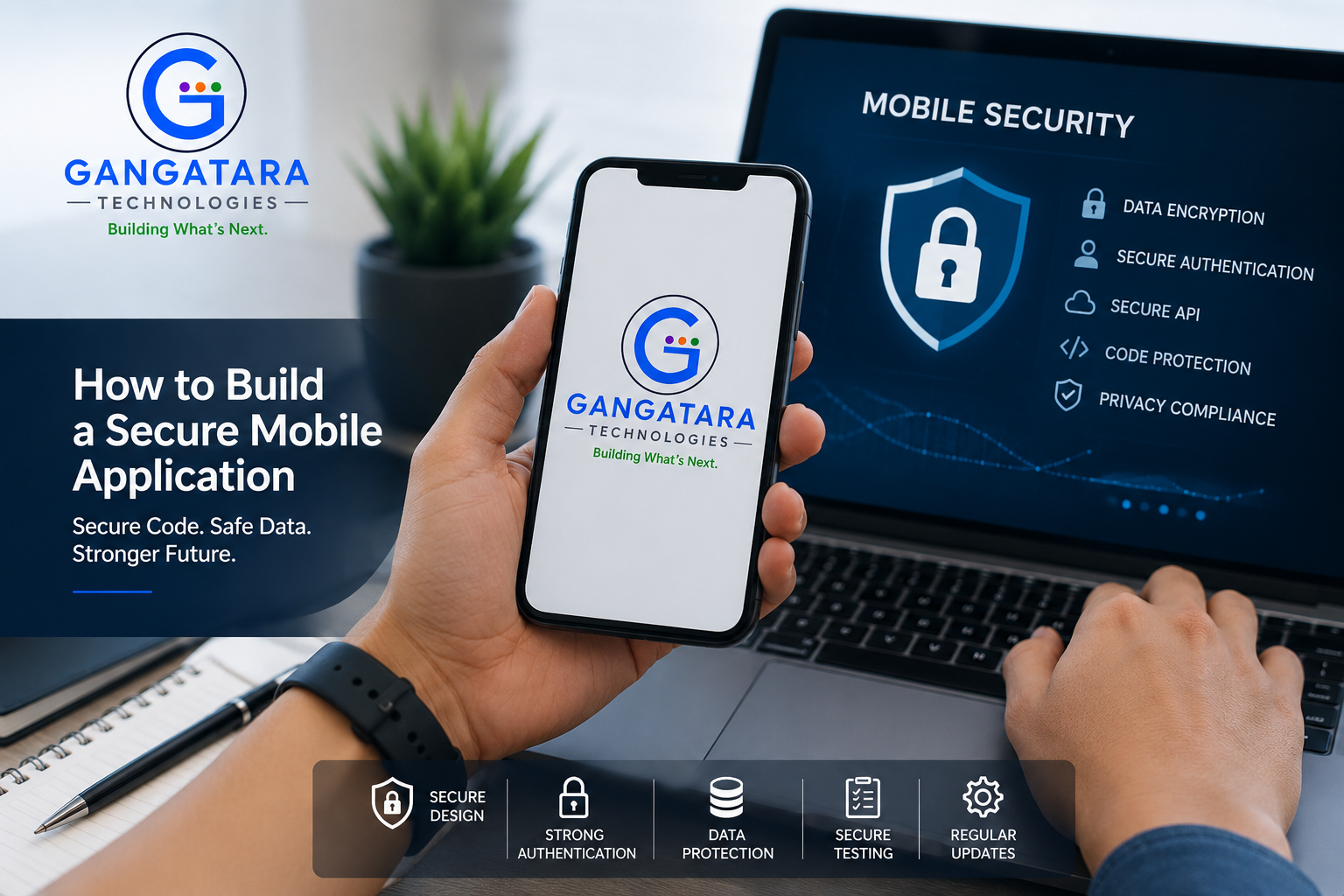
The mobile application has become increasingly significant in contemporary business practices because it enables company representatives to perform routine tasks, save customers’ payment data, conduct customer relationship management, and interact with clients. Yet, they have become an attractive target for hackers since the apps contain a substantial amount of personal and business data. A secure data application is essential because it significantly minimizes the risk of being hacked or compromised. Besides, a safe and reliable mobile application enhances the organization’s image, attracting more customers. This article aims to provide an overview of the tips on how to build a secure mobile application.
1. Plan the Security Strategy.
The first step in developing a secure application is to identify the firm’s security requirements and design a mobile application strategy. At this stage, the application developer should understand what data the software will store and process. A secure application development plan includes the risk assessment process, addressing weaknesses, and establishing security standards.
2. Design a Secure Authentication System.
The authentication system enables only selected users to access the application’s data and resources. An insecure authentication system allows attackers to gain unauthorized access to the firm’s software and data. In this regard, businesses should invest in secure authentication solutions, techniques, and procedures to protect their systems from being compromised. Location, phone numbers, passwords, and touch authentication can also be used to enhance security. A strong authentication strategy should be designed to protect the application from brute-force attacks, which prevent attackers from gaining access to sensitive information.
3. Ensure Confidentiality of Users’ Personal and Business Data.
Personal and business data of the application users are the most desirable information for hackers. Hence, software designers should develop an encryption strategy to ensure confidentiality and prevent the occurrence of cyber safety risks, data integrity risks, and system availability risks. The encryption strategy should be applied while designing the application to guarantee that the data are not stored on the users’ devices where the software is installed because it is insecure. Developers should also ensure that the encryption keys and authentication data are not saved on their devices. Besides, they should apply data confidentiality encryption to guarantee that the data being processed are secure. Another effective strategy for achieving confidentiality is key rotation.
4. Ensure Secure Data Communication Through API.
The Application Programming Interface (API) document serves as an intermediary between servers, systems, and web services. API security entails the encryption of data to ensure its confidentiality and integrity while protecting the application data and systems in the servers, systems, and web services. The servers should be able to authorize every transaction conducted within the application. For instance, firms can use API security to limit communication to avoid data manipulation and prevent unauthorized modification of the application.
5. Adopt Secure Application Coding.
A secure software development life cycle should include developing secure coding standards and practices to prevent risks at the source. Code confidentiality is vital because it is prone to vulnerabilities and can be compromised, thus exposing the firm’s application programming framework and encryption keys to attackers. Firms should ensure that all data, instructions, and information sent to their application are secure since they can be used to maneuver the system and cause harm. Developers should use appropriate and secure web application development techniques and guidelines while designing and building the software.
Application libraries, tools, codes, and software development kits have vulnerabilities and should be updated regularly. Developers should adhere to the principles of secure application programming, such as using encrypted application programming instruction (API). They should also guarantee confidentiality of application programming instruction (API) keys and programming passwords.
6. Develop a Safe Authorization Mechanism.
The authorization mechanism allows the application users and administrators to authorize or deny approval of requests sent to the application services. The authorization process enables the application users to ensure that only approved users or software access the application services and data. Besides, it guarantees that the application data and services are protected from illegal access. Therefore, businesses should deny access to the application users unless they have been granted permission. At the same time, the application’s authorization mechanism should ensure that only the authorized users access the application data and services. It should also be able to deny data access to unauthorized users and confirm whether the application users requesting specific information have permission to access the data.
7. Keep Application Keys Confidential.
Confidentiality is vital for the success of application programming instruction (API), as it safeguards the most critical aspects, including the application programming instruction (API) keys and programming passwords. Hence, it is essential to ensure that this information is not accessed by unauthorized individuals or entities. Organization data are stored in servers, which are remote, whereas the secret, which enables the application on the phones to communicate and send messages, is local. Therefore, it is essential for the company to invest in software protection and ensure that the application is safe from threats such as password guessing, reverse engineering, application hacking, inspection and debugging processes, API security, exposure of cryptographic signatures, and system processes.
8. Ensure Regular Expression Testing.
One of the best ways of keeping mobile data apps secure is by conducting regular testing of the system to detect existing and potential cybersecurity risks. Expression testing enables firms to identify loopholes, making it difficult for hackers to manipulate the default settings and damage the application. Companies should perform monthly tests on their data applications to protect them against the following:
- Unauthorized access
- Injections
- Broken or insecure authentication
- Broken or unprotected data
- A firm can conduct the following tests to ensure the application’s security:
- Vulnerability and penetration scanning and testing
- Code review
- Security testing
- API testing
- Authentication test
- Data protection test
- Mobile device test and security testing
9. Keep Tools, Add-ons, and Libraries Updating.
Updating tools on a frequent basis enhances the performance of the applications. For instance, companies should update tools such as Application Programming Interfaces (APIs), Scales Development Kit, tools, codes, and programming languages to develop a secure mobile application. Developers should also update the security features, including the strategies used to protect application data from being tampered with and authentication strategies.
10. Provide Constant Application Protection.
Application security is not absolute; thus, it is essential for the developers to provide cybersecurity advice to the application users. This will enable them to stay ahead of existing and potential threats. New data safety measures, authentication strategies, and application programming code are frequently introduced in the mobile ecosystem, which may compromise the application’s security.
Best Practices for Mobile Application Security
Firms that intend to design a mobile data application should consider adopting the following cybersecurity recommendations and strategies:
- Ensure that the system uses HyperText Transfer Protocol Secure 1.
- Invest in key authentication and develop a strong multifactor authentication system.
- Provide encryption for a secure application.
- Adopt the strategy to prevent unauthorized input.
- Implement Application Program Interface (API) authentication and authorize
- Avoid storing private information.
- Ensure that libraries, tools, and add-ons are regularly updated by removing the obsolete programs.
Conduct extensive testing to guarantee application security. It is important to promote and maintain the applications. Adopt a system that protects the secrecy and confidentiality of the clients’ data.
Conclusion.
Designing an organization’s secure mobile application requires knowledge about the mobile threat environment and application security measures, procedures, and tactics, including cryptography and secure key management. Acquiring information about the technology underpinning cellular communication, including the security aspects of the cellular infrastructure, is equally crucial. As an information technology outsourcing company, Ganagatara Technologies offers application design, creation, and development strategies that are in the firm’s best interest.
Are you interested in creating a secure mobile application? Allow us to help you convert ideas into reality at Ganagatara Technologies Limited.